 Investigators looking into the fatal crash of a private jet in Central Florida have found a critical piece of wreckage. The Learjet’s horizontal stabilizer was recovered far enough outside of the main wreckage for experts to conclude it came off while the airplane was still inflight.
This is not a huge surprise. Photos of the plane descending over the Greenacres neighborhood pretty clearly showed that the tailplane was not intact. Still, National Transportation Safety Board member Thomas Chapman said “Finding that piece is a very, very significant bit of evidence.”

The left elevator, which controls the airplane’s pitch, was recovered in three pieces somewhere between one and a half and nearly 4 miles from the crater created by the crash. Chapman did not say who found these pieces. This is progress in one area but work in the main impact zone has been troublesome.
Rainwater and safety hazards have made it difficult to examine the confined area of wreckage in the impact zone. Chapman reported that progress to secure and drain the crater should soon allow for recovery of more pieces of the airplane.

Meanwhile, investigators are gathering records related to the Canadian airplane management company, Aurora Jet and the charter jet company Upper Jet, based in Ft. Lauderdale. Their operations, the airplane’s owner and maintenance information are all being gathered as are records related to the pilots’ training and experience.

The captain of the flight was 55-year old Jeffrey Gregory. Though the NTSB has not yet obtained his career details, Federal Aviation Administration records show the longest he could have been flying the Learjet as captain would be five years because that’s when he obtained the required airline transport pilot certification.
Between 2016 and 2017, he trained on the Learjet at East Coast Jets, a charter aircraft operator, according to a woman who answered the phone at the company this morning and identified herself as April. East Coast executive Charles Strong told me that although Gregory’s lack of an ATP prevented him from flying for the company as captain it did not keep him from flying right seat. “Only the captain needs an ATP,” he wrote in an email.

The experience of the first officer is easier to sort through. Nathalia Gadelha Filgueiras received her ATP rating in March of this year and became qualified to fly as a Learjet first officer at the same time.
With the investigation already focused on the extreme weather through which the charter flight was traveling, pilot experience and judgment will very likely be a significant part of the probe.

Another young woman aboard the doomed flight was 23-year old Anita Maria Cetina, a Colombian immigrant working as a nanny for 4-year old Emma and 2-year old Charlie. The children’s grandparents described Cetina as a part of the family. The toddlers in her care were the children of Adam Robinson, 45, an entrepreneur who co-founded the marketing technology company, Retention.com, and his 40-year old wife, ceramic artist Helen Sharp. They were residents of Texas.

Accompanying the Robinson Sharp family were two friends, Rachael Reed, a nurse and cosmetic artist and Charmi Fehr, whose LinkedIn account shows him as a foreign trade specialist and the owner of Arca Roatan, a resort hotel off the coast of Honduras.

In private aviation accidents it is the affluent and/or influential travelers whose deaths dominate the news cycle. This is the rare story that puts the spotlight on the junior member of the flight crew.

Filgueiras became the poignant narrator of the accident as she described a quickly deteriorating situation over the public radio frequency used to communicate with air traffic control. She documented the crews’ problems with icing, turbulence and loss of control, and at the end acknowledged they would would die.
With this, a young aviator so enthusiastic she opted to get her pilot’s license before her driver’s license has left an extraordinary legacy that is also metaphorical crater to the heart of all those with whom she will never fly.




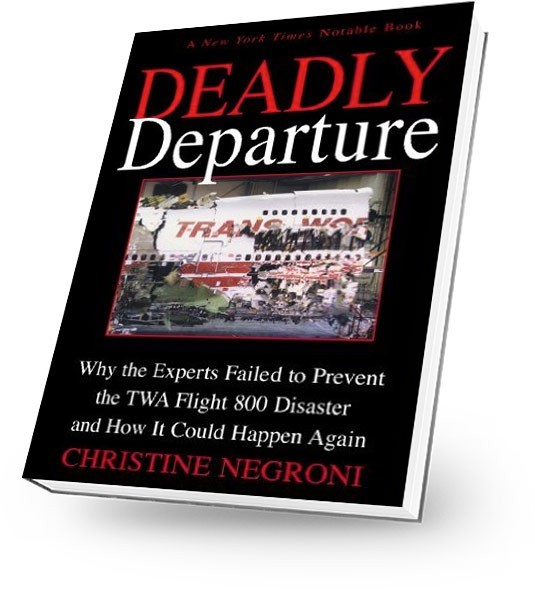
“Fate is the Hunter”
Ernest Gann
Ref “The left elevator, which controls the airplane’s pitch, was recovered in three pieces somewhere between one and a half and nearly 4 miles from the crater created by the crash.”
Most people are not aware that the horizontal stabilizer also produces a downward force that is vital to prevent the aircraft from pitching nose down. If the horizontal stabilizer detaches from the airplane, the aircraft will pitch nose down and crash.
My suspicion is that the turbulence was only moderate. But the support for the stabilizer may have weakened due to metal fatigue. The latter may be the root cause. The turbulence may only have been the last straw.
Two of my colleagues were killed in a similar accident exactly 50 years ago.
Thanks for providing additional detail. The airplane was over 20 years old, so I understand your thought about metal fatigue, though it would have appeared in maintenance inspections. However, I am curious as to why you think the turbulence was moderate considering the crew was reporting altitude deviations between 600 and 700 feet?