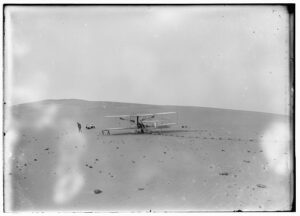
The title of Caroline Paul’s new book poses a seemingly simple question: Why Fly?
Her answer unfolds on many levels, like a particularly fetching landscape you’ll want to remember flying over.
Why Fly is funny and geeky with a healthy, stealthy dose of little-known aviation facts. It is also a thought-provoking and beautifully written amble through Paul’s adventures in the sky.

An intrepid outdoorswoman, firefighter, and author of eight books, Caroline Paul learned to fly in a Cessna 152 when she was 20 years old. She did not find the 24-foot 2-seat airplane satisfying. It felt too much like being in a “soup can” she writes. So she eliminated the barrier between herself and the sky, switching first to paragliding then to a motorized hang glider. Much of her book focuses on the lemon yellow gyrocopter that is her ride as she enters late middle age.

Dialing down to the puniest of planes does not narrow the scope of Paul’s acute observations, which are expansive. She writes how in the short amount of time humans have been flying, the impacts have been consequential – globally and individually – in ways we may appreciate, regret, or misunderstand.
“Wind seems willy-nilly but it is not,” she writes of this, a key player in gyro operations deserving of significantly more respect than it gets. Wind “…it is as focused as an Olympic athlete, its goal to fill a constant vacuum of rising and failing air, and doing it by bounding, bypassing, boring its way to its destination, often backflipping over cliff edges and buildings, creating currents insistent, intense, dangerous but never wayward.”
Birds get her attention, too, along with her respect.
“Pigeons are described as ‘flying rats,’ but why?, she asks. “Iridescent breasts, sharp-cornering flight, an ability to adapt to whatever is thrown their way-what’s not to admire?”

I pictured Paul in her minuscule machine moving across the sky like a dandelion seed pod. I was wrong, the transport mechanics are entirely different, though here’s how that image came to me.
Towards the end of the book, she is on a trip and somewhat frazzled. It has been a challenging multi-day journey and she has plans to overnight at Furnace Creek south of California’s Death Valley.
She thinks she’s there, then realizes she is lost. When she figures out she is one valley west of where she should be, even she sees how she is miniturized against the grandeur of the 11-thousand-foot-high, 100-mile-long Panamint Range.
“I saw myself as if from afar, against the silent immovable stone, just a spinning yellow speck of…what was that, someone might say, dust?
“And it was how the moment stretched out behind me for a million years, and forward for another million, and here this rock was and would continue to be, while I would exist and then be swatted from that existence in a relative millisecond (like that, I imagined the cosmos saying, snapping its fingers to demonstrate just how quickly.)
“What was I feeling? It was more complicated than joy, deeper than satisfaction, fuller than bravery,” she writes. “Honestly, I couldn’t name what was washing over me, except that the jumble of emotions ultimately merged into one: awe.”
Twenty years ago, a family friend shared with me the personal diary of her late father, Robert Evans. His career started in the late thirties on flying boats and ended when he retired as a 747 captain for Pan American Airlines.
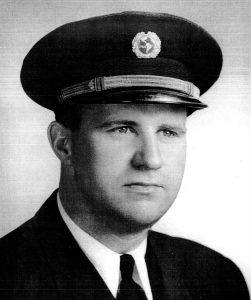
After finishing Paul’s book, and marveling at how flying had enhanced her appreciation for many of the “ologies” astronomy, biology, geology, meteorology, ornithology, zoology, I went back to Evan’s manuscript, remembering he’d written similar sentiments.
In a chapter titled, “Unusual Earthly Sights” he describes sunrises in the west during the height of the Nordic summer, detouring around a thunderstorm on the way to Johannesburg and descending through mist directly over Victoria Falls. My favorite was the story of flying an airplane as static electricity, or St. Elmo’s Fire built up around the propellers, wings and fuselage. Until, Evans writes, “a blue ball of static developed in the cabin – rolling down the aisle – and discharging off the tail.”
Evans and Caroline Paul are very different pilots, yet along with pilot/authors Mark Vanhoenacker, Ernest K. Gann, Beryl Markum, Anne Morrow Lindbergh and Antoine de Saint-Exupery, they are powerful witnesses to the soul-sustaining privilege of being in the sky.
Traveling by air has lost its luster. Shifting our point of view can change the perspective. Why Fly brings that lesson home.

Why Fly Seeking Awe, Healing, and Our True Selves in the Sky was published by Bloomsbury on February 24, 2026